Cuộc cách mạng sản xuất đá công nghiệp: Cách các máy làm đá khối công suất lớn CBFI tái định hình tiêu chuẩn ngành
Giới thiệu
Trong bối cảnh công nghiệp hóa toàn cầu đang tăng tốc, công nghệ sản xuất đá đóng vai trò là mắt xích quan trọng trong chuỗi cung ứng của nhiều ngành công nghiệp. Hiệu suất, tính kinh tế và tính bền vững của công nghệ này ảnh hưởng trực tiếp đến khả năng sinh lời trong vận hành của các lĩnh vực như thủy sản, chế biến thực phẩm, sản xuất hóa chất, xây dựng và logistics. Thiết bị sản xuất đá truyền thống đang phải đối mặt với nhiều thách thức về mức tiêu thụ năng lượng, mức độ tự động hóa, chất lượng đá và chi phí bảo trì. Điều này đã thúc đẩy nhu cầu cấp thiết của ngành đối với các giải pháp sản xuất đá hiệu quả hơn, thông minh hơn và thân thiện với môi trường hơn. CBFI (Công ty TNHH Icesource Quảng Châu), dựa trên chuyên môn sâu rộng và sự đổi mới liên tục trong lĩnh vực máy làm đá khối công suất lớn, đang dẫn đầu cuộc cách mạng trong công nghệ sản xuất đá công nghiệp. Thông qua hai hướng công nghệ cốt lõi—Làm lạnh trực tiếp và Hệ thống nước muối—CBFI cung cấp các giải pháp sản xuất đá hiệu suất cao, được tùy chỉnh cho khách hàng toàn cầu.Bài viết này sẽ đi sâu phân tích những điểm khó khăn hiện tại của ngành sản xuất đá công nghiệp, trình bày chi tiết các giải pháp đổi mới và ưu thế sản phẩm của CBFI, cung cấp hướng dẫn toàn diện về lựa chọn thiết bị, giới thiệu các kết quả thực tiễn nổi bật thông qua những trường hợp thành công cụ thể, và cuối cùng cung cấp phần Câu hỏi thường gặp toàn diện để giải đáp các thắc mắc phổ biến.
Phân tích những điểm khó khăn của ngành sản xuất đá công nghiệp toàn cầu
Những thách thức hiện nay mà lĩnh vực sản xuất đá công nghiệp phải đối mặt rất đa dạng, chủ yếu thể hiện qua các điểm khó khăn cốt lõi sau:
1. Mức tiêu thụ năng lượng và chi phí vận hành cao
Bản thân quá trình sản xuất đá là một hoạt động tiêu tốn nhiều năng lượng. Đặc biệt đối với các thiết bị công suất lớn, điện năng tiêu thụ chiếm phần lớn trong chi phí vận hành. Các công nghệ sản xuất đá truyền thống thường đi kèm với tỷ lệ hiệu suất năng lượng thấp hơn, khiến doanh nghiệp phải chịu những khoản chi phí năng lượng khổng lồ trong quá trình vận hành dài hạn. Ngoài ra, việc thiết bị thường xuyên gặp sự cố và công tác bảo trì kém hiệu quả cũng làm tăng Tổng Chi phí Sở hữu (TCO).
2. Phụ thuộc vào lao động thủ công và các nguy cơ an toàn trong vận hành
Nhiều máy làm đá khối truyền thống, đặc biệt là thiết bị sử dụng nước muối, vẫn cần một lượng lớn lao động thủ công trong giai đoạn thu hoạch đá. Điều này không chỉ làm tăng chi phí nhân công và giảm hiệu suất sản xuất mà còn tạo ra các rủi ro an toàn do những sai sót trong quá trình vận hành. Trong môi trường sản xuất đá có nhiệt độ cao và độ ẩm lớn, việc lao động thể chất kéo dài cũng là một thách thức đáng kể đối với sức khỏe người lao động.
3. Chất lượng đá không đồng đều và rủi ro vệ sinh
Chất lượng của đá khối ảnh hưởng trực tiếp đến hiệu quả sử dụng, đặc biệt trong các lĩnh vực thực phẩm và dược phẩm. Thiết bị sản xuất đá truyền thống có thể gặp các vấn đề như độ trong suốt của đá kém, độ cứng không đủ và tốc độ tan chảy nhanh. Trong quá trình sản xuất đá bằng nước muối, nếu quản lý không tốt, nước muối có thể thấm vào các khối đá, làm ảnh hưởng đến độ tinh khiết và thậm chí gây ra các rủi ro về an toàn thực phẩm và vệ sinh.
4. Hạn chế về không gian và khả năng thích ứng với môi trường
Thiết bị sản xuất đá công suất lớn thường có kích thước cồng kềnh, đòi hỏi không gian lắp đặt lớn. Trong thế giới hiện nay, khi tài nguyên đất ngày càng khan hiếm, việc sử dụng không gian hiệu quả đã trở thành vấn đề được các doanh nghiệp quan tâm. Đồng thời, khả năng thiết bị vận hành ổn định trong các điều kiện khí hậu khác nhau cũng như việc tuân thủ các quy định về môi trường là những yếu tố doanh nghiệp cần cân nhắc khi lựa chọn giải pháp sản xuất đá.
5. Độ phức tạp trong bảo trì và tuổi thọ thiết bị
Hoạt động ổn định lâu dài của thiết bị sản xuất đá phụ thuộc vào công tác bảo trì hiệu quả. Cấu trúc phức tạp và các linh kiện dễ bị ăn mòn của thiết bị truyền thống khiến công việc bảo trì tốn nhiều thời gian và nhân lực. Vấn đề ăn mòn trong hệ thống nước muối đặc biệt nghiêm trọng, có thể làm giảm tuổi thọ thiết bị và tăng tần suất cũng như chi phí sửa chữa.
Giải pháp CBFI: Đổi mới công nghệ và ưu thế sản phẩm
Để giải quyết những điểm khó khăn nêu trên của ngành, CBFI đã phát triển hai dòng máy làm đá khối cốt lõi thông qua việc nghiên cứu công nghệ liên tục và tối ưu hóa sản phẩm: Máy làm đá khối làm lạnh trực tiếp và Máy làm đá khối nước muối. Mỗi dòng đều sở hữu những ưu điểm và kịch bản ứng dụng riêng biệt.
1. Máy làm đá khối làm lạnh trực tiếp: Tự động hóa, hiệu quả và vệ sinh
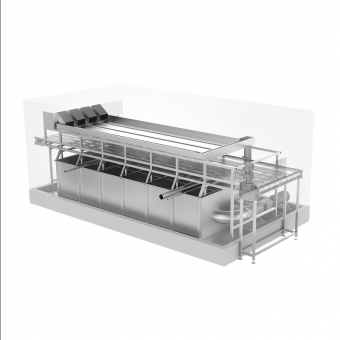
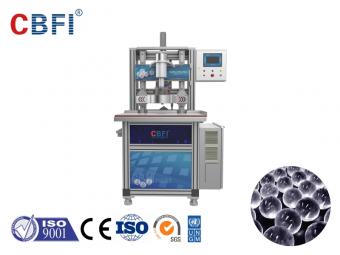
Máy làm đá khối làm lạnh trực tiếp của CBFI đại diện cho công nghệ sản xuất đá hiện đại tiên tiến, đặc biệt nổi bật nhờ mức độ tự động hóa cao, chất lượng đá vượt trội và hiệu suất năng lượng cao. Lấy Máy làm đá khối tự động CBFI 30 tấn mỗi 24 giờ (ABI300) làm ví dụ, các ưu điểm cốt lõi bao gồm:
•Vận hành hoàn toàn tự động: ABI300 thực hiện tự động hóa hoàn toàn từ cấp nước, làm đá đến thu hoạch đá, không cần sự can thiệp thủ công. Các khối đá được đông lạnh trực tiếp trong bộ bay hơi bằng nhôm, tự động tách khuôn sau chu kỳ làm đá và trượt trực tiếp vào phòng lạnh thông qua máng dẫn. Điều này giúp giảm đáng kể chi phí nhân công và rủi ro vận hành.
•Hiệu suất cao và tiết kiệm năng lượng: Nhờ sử dụng công nghệ trao đổi nhiệt tiên tiến và thiết kế tối ưu, ABI300 đạt hiệu quả cao trong sản xuất đá. So với máy làm đá khối nước muối truyền thống, thiết bị có thể tiết kiệm hơn 30% mức tiêu thụ năng lượng. Điều này giúp giảm đáng kể chi phí vận hành của doanh nghiệp và nâng cao lợi ích kinh tế.
•Chất lượng đá vượt trội: Các khối đá được sản xuất bằng công nghệ làm lạnh trực tiếp có độ trong suốt cao, độ cứng lớn, tan chậm và đáp ứng tiêu chuẩn sử dụng ăn uống. Bề mặt đá nhẵn mịn, không có bọt khí, tinh khiết và vệ sinh, đặc biệt phù hợp với các ngành có yêu cầu nghiêm ngặt về chất lượng đá như chế biến thực phẩm và bảo quản thủy sản.
•Bảo vệ môi trường và an toàn: Hệ thống làm lạnh trực tiếp loại bỏ nhu cầu sử dụng nước muối, tránh các vấn đề về ăn mòn và ô nhiễm do nước muối gây ra, đồng thời thân thiện hơn với môi trường. Bên cạnh đó, vận hành tự động giúp giảm tiếp xúc thủ công, nâng cao mức độ an toàn của quy trình sản xuất.
•Thiết kế nhỏ gọn: Thiết bị có diện tích chiếm dụng nhỏ, thiết kế mô-đun giúp việc lắp đặt và mở rộng trở nên thuận tiện, tiết kiệm hiệu quả diện tích đất công nghiệp quý giá.
2. Máy làm đá khối nước muối: Ổn định, bền bỉ và công suất lớn
Mặc dù công nghệ làm lạnh trực tiếp ngày càng phổ biến, Máy làm đá khối nước muối của CBFI vẫn giữ vị trí quan trọng nhờ tính ổn định đã được kiểm chứng, độ bền chắc cao và khả năng đáp ứng nhu cầu công suất lớn. Lấy Máy làm đá khối CBFI 100 tấn mỗi 24 giờ (BBI1000) làm ví dụ, các đặc điểm bao gồm:
•Công suất cực lớn: BBI1000 được thiết kế đặc biệt cho các ứng dụng công nghiệp yêu cầu sản lượng đá cực cao, với công suất hằng ngày của một máy đạt tới 100 tấn, đáp ứng nhu cầu của các dự án quy mô lớn.
•Khả năng chống ăn mòn vượt trội: Bề mặt bể nước muối sử dụng công nghệ chống ăn mòn tiên tiến, được xử lý với hai lớp sơn lót và một lớp sơn phủ, đảm bảo không bị bong tróc khi ngâm lâu dài trong nước muối. Tuổi thọ sử dụng cao hơn 35% so với các sản phẩm tương tự. Thành ống cuộn bay hơi dày tới 3mm, với tuổi thọ lên đến 20 năm, giúp giảm đáng kể chi phí bảo trì và thay thế.
•Khuôn đá tùy chỉnh: Khuôn đá có thể được tùy chỉnh với nhiều kích thước và trọng lượng khác nhau theo nhu cầu của thị trường địa phương, cung cấp các giải pháp sản xuất linh hoạt.
•Bảo vệ máy nén: Được trang bị bình chứa lỏng dung tích lớn, đảm bảo máy làm đá vận hành mà không xảy ra va đập chất lỏng trong môi trường có chênh lệch nhiệt độ lớn, bảo vệ hiệu quả máy nén và kéo dài tuổi thọ thiết bị.
•Chín muồi và đáng tin cậy: Công nghệ làm đá nước muối đã được thị trường kiểm chứng trong thời gian dài, vận hành ổn định và đáng tin cậy với tỷ lệ hỏng hóc thấp, trở thành lựa chọn ưu tiên của nhiều khách hàng công nghiệp truyền thống.
3. So sánh và lựa chọn công nghệ
Hướng dẫn lựa chọn máy làm đá khối công suất lớn
Việc lựa chọn máy làm đá khối công suất lớn phù hợp là yếu tố then chốt để đảm bảo thành công của dự án. Dưới đây là một số yếu tố quan trọng cần xem xét:
1. Nhu cầu công suất và mở rộng trong tương lai
Trước tiên, hãy đánh giá nhu cầu đá hằng ngày và xem xét khả năng mở rộng cho sự phát triển kinh doanh trong tương lai. CBFI cung cấp các giải pháp tùy chỉnh từ 3 tấn đến 100 tấn hoặc thậm chí công suất lớn hơn. Nếu nhu cầu lớn và ổn định, có thể lựa chọn các máy làm đá nước muối công suất lớn như BBI1000; nếu ưu tiên tính linh hoạt và tự động hóa, các máy làm đá làm lạnh trực tiếp như ABI300 sẽ có nhiều ưu điểm hơn.
2. Mục đích sử dụng đá và yêu cầu về chất lượng
•Đá ăn được / Yêu cầu vệ sinh cao: Đối với các ứng dụng như chế biến thực phẩm, dịch vụ ăn uống và bán lẻ siêu thị, máy làm đá khối làm lạnh trực tiếp được khuyến nghị mạnh mẽ. Các khối đá được sản xuất có độ tinh khiết cao, hợp vệ sinh và đáp ứng tiêu chuẩn dùng làm thực phẩm.
•Đá công nghiệp / Làm mát quy mô lớn: Đối với bảo quản thủy sản, làm mát hóa chất và trộn bê tông, máy làm đá khối nước muối vẫn là lựa chọn kinh tế và hiệu quả nhờ độ bền chắc cùng công suất lớn.
3. Mức độ tự động hóa và chi phí nhân công
Nếu chi phí nhân công cao hoặc mong muốn quản lý có mức độ tự động hóa cao, máy làm đá khối làm lạnh trực tiếp là lựa chọn lý tưởng, giúp giảm đáng kể sự can thiệp thủ công. Nếu ngân sách hạn chế và chi phí nhân công thấp, máy làm đá khối nước muối cũng có thể đáp ứng nhu cầu theo mô hình thu hoạch đá thủ công.
4. Điều kiện địa điểm và các yếu tố môi trường
Hãy xem xét diện tích có sẵn tại địa điểm lắp đặt. Máy làm đá khối làm lạnh trực tiếp thường có diện tích chiếm chỗ nhỏ hơn, phù hợp hơn với các địa điểm hạn chế không gian. Đồng thời, đánh giá điều kiện khí hậu địa phương và các quy định về môi trường để lựa chọn loại môi chất lạnh và thiết bị phù hợp nhất.
5. Lợi tức đầu tư (ROI) và chi phí vận hành dài hạn
Cần xem xét toàn diện khoản đầu tư ban đầu cho thiết bị, mức tiêu thụ năng lượng, chi phí bảo trì, chi phí nhân công và tuổi thọ thiết bị. Mặc dù máy làm đá khối làm lạnh trực tiếp có thể có khoản đầu tư ban đầu cao hơn một chút, nhưng các tính năng tiết kiệm năng lượng và tự động hóa có thể giúp giảm chi phí vận hành dài hạn và mang lại ROI cao hơn. Máy làm đá khối nước muối, với tính ổn định và độ bền cao, có lợi thế trong các tình huống công suất lớn cụ thể.
Phân tích chuyên sâu các trường hợp thành công của CBFI
Các giải pháp làm đá của CBFI đã được áp dụng thành công trên toàn cầu. Hai trường hợp dưới đây thể hiện đầy đủ năng lực công nghệ và giá trị mang lại cho khách hàng.
1. Trường hợp 1: Dự án máy làm đá khối làm lạnh trực tiếp 10 tấn tại An Huy, Trung Quốc
Năm 2024, CBFI đã cung cấp và lắp đặt thành công một giải pháp máy làm đá khối làm lạnh trực tiếp 10 tấn cho một khách hàng tại tỉnh An Huy, Trung Quốc. Dự án này không chỉ cung cấp khả năng sản xuất đá hiệu suất cao mà còn tích hợp một kho lạnh 500 mét khối, tạo nên dịch vụ trọn gói từ làm đá đến lưu trữ đá.
•Các khối đá chất lượng cao: Sử dụng khuôn đá bằng hợp kim nhôm tiên tiến và máy nén của các thương hiệu nổi tiếng thế giới (như Bitzer/Copeland/Refcomp), thiết bị có thể sản xuất các khối đá trong suốt, đồng đều 20kg hoặc 50kg trong vòng 8-12 giờ. Bề mặt đá nhẵn mịn, không có bọt khí, vượt xa chất lượng của các hệ thống nước muối truyền thống.
•Hệ thống thu hoạch đá hoàn toàn tự động: Sau khi các khối đá được tạo thành, chúng tự động tách khỏi khuôn và trượt trực tiếp vào kho lạnh thông qua máng nghiêng, không cần xử lý thủ công hoặc thiết bị nâng. Điều này giúp giảm đáng kể cường độ lao động và rủi ro an toàn, đặc biệt phù hợp với các nhà máy đá thương mại quy mô lớn.
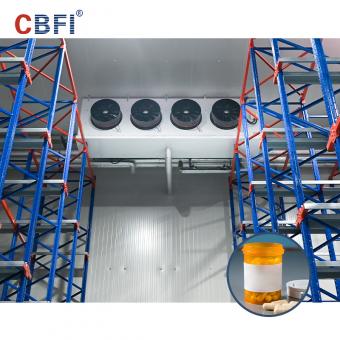
•Giải pháp kho lạnh tích hợp: CBFI đã thiết kế và xây dựng một kho lạnh chuyên nghiệp hơn 500 mét khối cho khách hàng, sử dụng tấm PU mật độ cao và các cụm làm lạnh hiệu suất cao để đảm bảo nhiệt độ kho lạnh luôn ổn định ở mức -10°C, đảm bảo lưu trữ đá dài hạn mà không bị tan chảy. CBFI cung cấp dịch vụ kỹ thuật "chìa khóa trao tay" từ sản xuất thiết bị, thiết kế kho lạnh đến lắp đặt và hướng dẫn kỹ thuật sau bán hàng.
•Ưu điểm tiết kiệm năng lượng: So với máy làm đá khối bằng nước muối, hệ thống làm lạnh trực tiếp này tiết kiệm hơn 30% năng lượng, giúp khách hàng giảm đáng kể chi phí vận hành.
•Tuổi thọ dài và bảo hành: Thiết bị có tuổi thọ thiết kế trên 15 năm và đi kèm bảo hành 3 năm, đảm bảo lợi nhuận dài hạn cho khoản đầu tư của khách hàng.
•Giá trị đối với khách hàng: Dự án này đã giúp khách hàng đạt mức độ tự động hóa cao trong quy trình sản xuất đá, cải thiện đáng kể chất lượng đá và hiệu suất sản xuất, đồng thời giảm mạnh mức tiêu thụ năng lượng và chi phí nhân công, tạo lợi thế cạnh tranh trên thị trường địa phương.
2. Trường hợp 2: Giải pháp đá toàn diện tại Antique, Philippines
Tại Antique, Philippines, CBFI đã cung cấp cho một khách hàng địa phương giải pháp làm đá toàn diện tích hợp một máy làm đá khối 10 tấn và một máy làm đá ống, đáp ứng hoàn hảo nhu cầu của ngành thủy sản và thị trường thực phẩm địa phương.
•Thân thiện với môi trường và tối ưu hóa không gian: Tất cả thiết bị CBFI đều sử dụng môi chất lạnh tiên tiến thân thiện với môi trường, hoàn toàn tuân thủ các quy định môi trường mới nhất tại Philippines và EU. Thiết kế mô-đun, nhỏ gọn giúp mỗi thiết bị chỉ cần diện tích sàn 15-18 mét vuông, giảm 30% không gian nhà máy so với hệ thống truyền thống, đồng thời dành nhiều diện tích cho việc mở rộng trong tương lai.
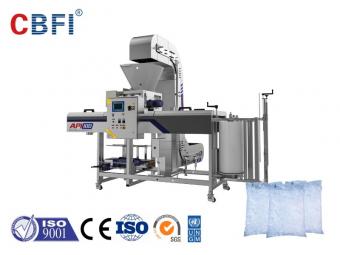
•Máy làm đá ống hiệu suất cao và hệ thống đóng gói bán tự động: Máy làm đá ống 10 tấn trong giải pháp này được kết hợp với hệ thống đóng gói bán tự động của CBFI, thực hiện việc nâng đá tự động, cân chính xác và đóng gói nhanh chóng. Một nhân viên duy nhất có thể hoàn thành việc đóng gói các túi đá 5-25kg trong vòng 8-12 giây, giảm 60% cường độ lao động và đạt sản lượng đóng gói không bị gián đoạn hơn 8 tấn mỗi ngày.
•Giải pháp tùy chỉnh: CBFI cung cấp các giải pháp tùy chỉnh từ 1 đến 100 tấn/ngày, cung cấp khảo sát tại chỗ miễn phí và thiết kế bố trí nhà máy 3D để đảm bảo giải pháp phù hợp hoàn hảo với nhu cầu khách hàng.
•Kinh nghiệm dịch vụ toàn cầu: Các giải pháp của CBFI đã được kiểm chứng tại hơn 5.000 nhà máy đá trên toàn thế giới, sở hữu kinh nghiệm dự án quốc tế phong phú và hỗ trợ kỹ thuật trọn đời.
•Giá trị đối với khách hàng: Thông qua thiết bị hiệu quả, thân thiện với môi trường và hệ thống đóng gói thông minh, dự án này đã giúp khách hàng tại Philippines nâng cao đáng kể hiệu suất sản xuất, giảm chi phí vận hành và đáp ứng nhu cầu thị trường địa phương bằng các khối đá chất lượng cao, đạt được sự tăng trưởng kinh doanh nhanh chóng.
Các câu hỏi thường gặp (FAQ)
Q1: Sự khác biệt chính giữa máy làm đá khối bằng nước muối và máy làm đá khối làm lạnh trực tiếp là gì?
A1: Máy làm đá khối bằng nước muối sử dụng dung dịch nước muối để làm đông nước sạch trong các khuôn đá, yêu cầu thu hoạch đá thủ công và chiếm diện tích lớn hơn. Máy làm đá khối làm lạnh trực tiếp làm đông nước trực tiếp trong các bộ bay hơi bằng nhôm, đạt khả năng tự động hóa hoàn toàn mà không cần nước muối, tạo ra các khối đá sạch hơn, có thể ăn được và chiếm ít diện tích hơn.
Q2: Loại máy làm đá khối nào tiết kiệm năng lượng hơn?
A2: Các máy làm đá khối làm lạnh trực tiếp hiện đại thường tiết kiệm năng lượng hơn vì sử dụng cơ chế trao đổi nhiệt tiên tiến và thường dùng các môi chất lạnh thân thiện với môi trường hơn. Mặc dù hệ thống nước muối cũng có thể đạt hiệu quả cao, máy làm lạnh trực tiếp thường mang lại hiệu suất năng lượng vượt trội hơn trên mỗi tấn đá được sản xuất.
Q3: Mất bao lâu để sản xuất một mẻ đá khối?
A3: Thời gian đông đá thay đổi tùy thuộc vào công suất máy, kích thước khối đá và điều kiện môi trường. Đối với máy làm đá khối làm lạnh trực tiếp CBFI, một mẻ đá khối thường có thể được sản xuất trong vòng 8-12 giờ. Hệ thống nước muối có thể có chu kỳ tương tự hoặc dài hơn một chút.
Câu hỏi 4: Máy làm đá khối CBFI có thể sản xuất các khối đá với kích thước khác nhau không?
Trả lời 4: Có, máy làm đá khối CBFI có khả năng thích ứng rất cao. Mặc dù các kích thước tiêu chuẩn như 20kg và 50kg rất phổ biến, máy có thể được cấu hình để sản xuất các khối đá có kích thước tùy chỉnh nhằm đáp ứng nhu cầu ứng dụng cụ thể.
Câu hỏi 5: Việc bảo trì nào cần thiết đối với máy làm đá khối công suất lớn?
Trả lời 5: Việc bảo trì định kỳ bao gồm kiểm tra hằng ngày, vệ sinh bộ ngưng tụ và kiểm tra định kỳ các bộ phận làm lạnh, hệ thống điện và mạch nước. So với các hệ thống nước muối, máy làm lạnh trực tiếp yêu cầu ít công tác bảo trì liên quan đến ăn mòn hơn. CBFI cung cấp hỗ trợ sau bán hàng toàn diện và hướng dẫn bảo trì.
Câu hỏi 6: Máy làm đá khối CBFI có phù hợp để sản xuất đá ăn được không?
Trả lời 6: Có, máy làm đá khối làm lạnh trực tiếp CBFI rất phù hợp để sản xuất đá ăn được vì các khối đá do máy tạo ra sạch, vệ sinh, trong suốt như pha lê và không tiếp xúc với nước muối. Nếu tuân thủ các quy trình vệ sinh nghiêm ngặt đối với khuôn chứa đá và nước, hệ thống nước muối cũng có thể sản xuất đá ăn được.
Câu hỏi 7: Tuổi thọ của máy làm đá khối công suất lớn CBFI là bao lâu?
Trả lời 7: Với việc lắp đặt đúng cách, bảo trì thường xuyên và tuân thủ các hướng dẫn vận hành, tuổi thọ của máy làm đá khối công suất lớn CBFI có thể đạt 10-15 năm hoặc lâu hơn, đảm bảo khả năng hoàn vốn đầu tư trong dài hạn.
Kết luận
Với những ưu thế kép về công nghệ làm lạnh trực tiếp và công nghệ nước muối, máy làm đá khối công suất lớn CBFI đã mang đến những thay đổi mang tính cách mạng cho lĩnh vực sản xuất đá công nghiệp toàn cầu. Dù là ngành chế biến thực phẩm theo đuổi mức độ tự động hóa và chất lượng đá tối ưu, hay ngành thủy sản và xây dựng yêu cầu sản xuất đá quy mô lớn, ổn định, CBFI đều có thể cung cấp các giải pháp được thiết kế riêng. Bằng cách giải quyết những điểm khó khăn của ngành, nâng cao hiệu quả năng lượng, giảm chi phí vận hành và cung cấp hỗ trợ kỹ thuật toàn diện cùng các minh chứng thành công thực tế, CBFI không chỉ là nhà cung cấp thiết bị làm đá mà còn là đối tác chiến lược giúp khách hàng đạt được sự phát triển bền vững và khả năng cạnh tranh trên thị trường. Lựa chọn CBFI đồng nghĩa với việc lựa chọn một tương lai hiệu quả, đáng tin cậy và thân thiện với môi trường trong lĩnh vực sản xuất đá.




 IPv6 mạng được hỗ trợ
 Tiếng việt
 English
 français
 русский
 español
 português
 العربية
 Melayu
 ไทย
ไทย Indonesia